
Do you read for fun? If you’re the average teen, likely not. That wasn’t always the case, though. The quickly changing climate of daily life has all but pushed reading out.
For me, losing reading started with gaining it during COVID. COVID, despite its many pitfalls, was a blessing in disguise for me. When the world shut down, boredom allowed me to discover how much I loved reading. I would read for long swaths of time, more than a hundred hours a month.
Reading was such a large part of my life that it became a part of my personality. My frequent daydreaming evolved from imagining fantasy lands to having a clear plan and vision for my future, forever changing my life for the better.
And it wasn’t just me; many studies, like one from the Scottish Book Trust, show that reading is incredibly important for kids and teens, especially. The NIH concluded that reading builds empathy by forcing the reader to understand what life is like in someone else’s shoes.
This expansion of worldview is critical to developing minds. As the need for social competence grows, understanding others is more important than ever before. But as our lives grow, what gets pushed out?
Social media is often cited as one of the main reasons teens’ literacy skills have declined, and there is evidence to support this.
A 2018 study found that “less than 20 percent of U.S. teens report reading a book, magazine, or newspaper daily for pleasure, while more than 80 percent say they use social media every day.”
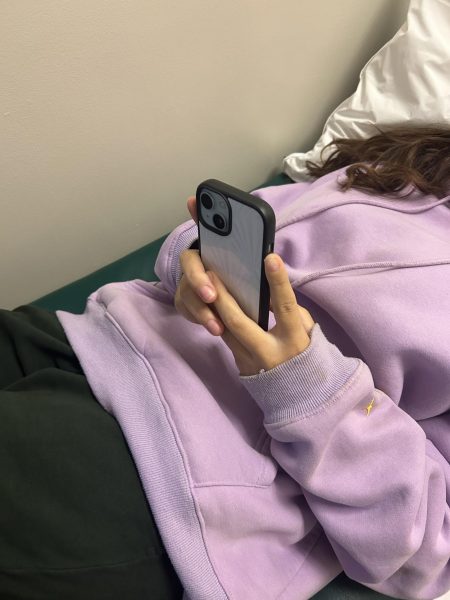
The data is staggering, and the numbers have only gotten worse. As of 2025, Pew reported that more than 50% of teens visit YouTube “several times a day” or “almost constantly.” TikTok’s exact split among teens — half frequent or overuse, half all other categories — isn’t promising, either.
But TikTok is not the sole cause of all of our problems. Removing social media would only be a band-aid solution; the root cause of our reading deficiency is that our lives have either pushed reading out or made lots of room for it.
English Teacher Nora Burnett cited her concerns that “there seems to be no middle ground for reading, students are either really dedicated to reading for fun, or they loathe reading outside of school.”
She added, “It is not solely social media’s fault. In an age of information overload and constant connectivity, teenagers rarely have a moment without digital distraction.”
She gave the example of how older generations could simply “have nothing to do,” and that one popular way to “cure” boredom was books.
Burnett added, “Today, there are too many other things that people can do. It seems that our attention spans are shrinking: not just in teens, but in adults too.”
Technology, as complex as AI or as simple as autocorrect, all claim to make our lives more efficient. Social media and the internet advertise all the information we’ll ever need. But even with all of these supposed benefits, our attention spans are shrinking, and books are being pushed out as a result. So what is there to be done?
The hardest part about changing our reading habits is that we can’t simply give up on our daily lives. Like it or not, our phones and other tools of life nowadays have become, in fact, necessary.

Fortunately, this doesn’t have to be a “please pick one” situation: balance is possible. When you reach for a phone or another distraction, set a timer. After a set amount of time, put it down and read a book. Try to find one that interests you; there’s no need for it to be a novel. It could be a magazine, a cookbook, or an article from a news outlet. Now is your chance to grow your empathy and social intelligence, one small step, forever improving your life.