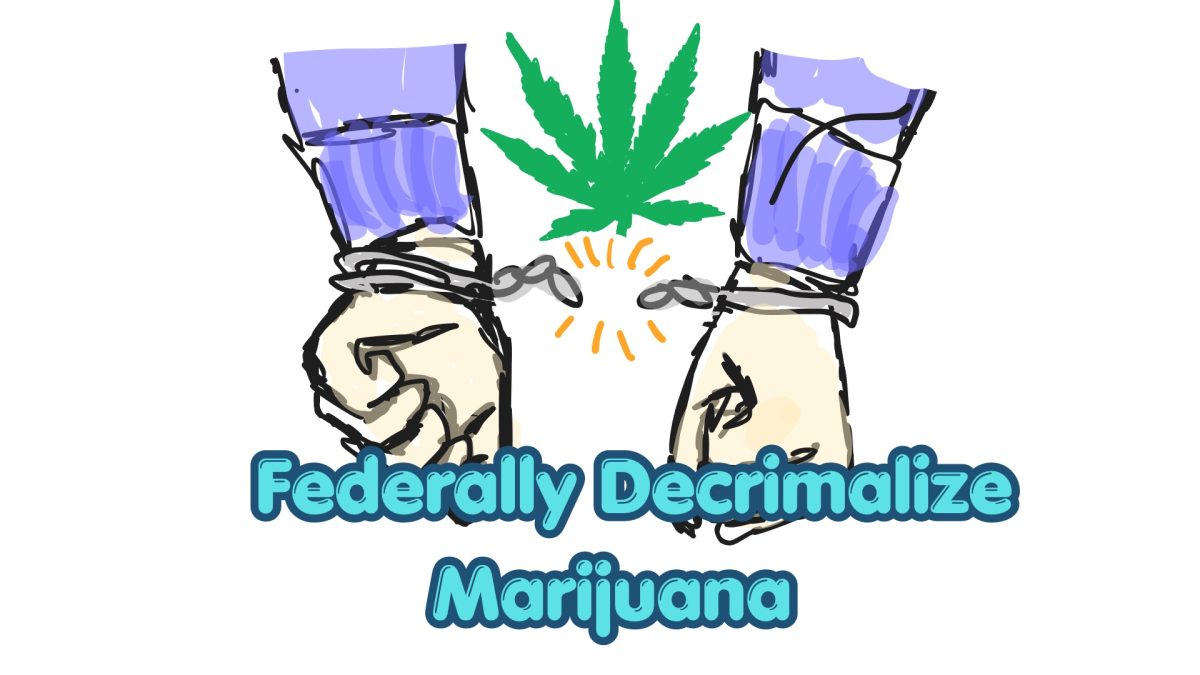
After decades of the federal government’s costly fight to eradicate marijuana in the United States, little has actually been done to inhibit the drug’s use. It is time that the United States government reconsidered the criminalization of marijuana, and it is time for citizens to push for the legalization of its recreational use on a federal level.
In 1970, the federal government passed the Controlled Substances Act, categorizing marijuana as a Schedule I drug. Schedule I drugs are drugs that have a high potential for abuse and no accepted medical uses. Schedule I substances are classified as the most dangerous drugs. This law categorized marijuana alongside drugs like heroin and LSD.
Marijuana has since been rescheduled to Schedule III as of April 2026. Schedule III drugs have been classified to have moderate to low dependency risk and accepted medical uses. However, decades of marijuana’s position as a Schedule I drug have greatly fueled negative perceptions of the drug.
Since the passing of the Controlled Substances Act, America has spent countless tax dollars attempting to avert the use of marijuana. According to the American Civil Liberties Union, “Enforcing marijuana laws costs us about $3.6 billion a year.” And we have yet to see any substantial evidence that the drug’s use has been hampered within the United States.
Additionally, the government’s war on marijuana has generated major racial disparity throughout the United States. A report published by the ACLU found that “Black people are 3.6 times more likely than white people to be arrested for marijuana possession, despite similar usage rates.”
Even from the start, the prohibition of marijuana has been rooted in prejudice. According to PBS, “the drug became associated with the [Mexican] immigrants, and the fear and prejudice about the Spanish-speaking newcomers became associated with marijuana.”
In addition to the many problems created by enforcing marijuana laws, legalizing marijuana on a national level would also create countless economic benefits.
States where marijuana has been legalized have already seen many economic benefits. For example, according to a report by MassBudget.org “Since the legalization of recreational, adult-use cannabis in 2016, cannabis sales in Massachusetts have generated nearly $2 billion in state and local revenue.”
There are more benefits that legal marijuana would give to the community, that are not just economic. A regulated marijuana industry would mean buyers would no longer be supporting illegal growers. These illegal marijuana growers regularly utilize violence in order to protect their markets, causing harm to communities.
A regulated industry would also increase the safety of the actual products. According to a paper from the National Library of Medicine, “Because of the federally illegal status of cannabis, there are no unified regulatory guidelines mitigating the public health risk of cannabis contaminants”.
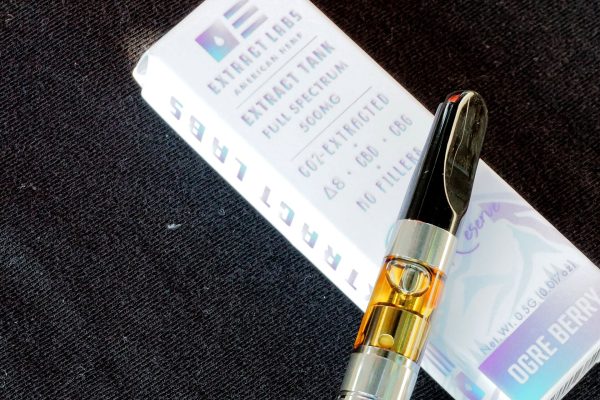
The lack of regulation for illegal marijuana is best shown in the market for THC vaping products. THC is the compound found within marijuana that is responsible for its psychoactive effects. An additional article from The National Library of Medicine reports that there have been “dozens of deaths due to the vaping of tetrahydrocannabinol (THC)-containing e-liquids that were obtained on the black market.”
Many people who are opposed to legalization argue that marijuana itself is incredibly unsafe. However, many reports indicate this is untrue. Evidence suggests that marijuana is safer than something most Americans consume daily, alcohol.
According to the Drug Enforcement Administration, “No deaths from overdose of marijuana have been reported.”
In contrast, according to the Centers for Disease Control, in the United States, “About 178,000 people die from excessive drinking each year.”
In recent years, things have been looking hopeful for the legalization of cannabis. As of 2026, recreational marijuana is legal in 24 states across the U.S. Additionally, as of April 23, 2026, marijuana has been federally rescheduled from a Schedule I drug to a Schedule III drug.
While many positive steps have been made, there is still much to be done to legalize cannabis on a federal level. So until more action is taken, the government is still pouring billions of dollars into a costly war against marijuana. One that is built upon racist principles, outdated evidence, and that has yet to see any success.
So ask yourself, why has marijuana been so stigmatized throughout the United States? Speak up for the countless people being unjustly arrested for possession of marijuana across the country, with a disproportionate number of them being African American. Use resources like the Marijuana Policy Project to urge Congress to end federal prohibition of marijuana, and the ACLU, in order to help the many Americans still suffering from the effects of harsh marijuana convictions.