Recently, at Hamilton-Wenham Regional High School, a new phone policy has been implemented: no one is allowed to have their phone from the end of homeroom until the end of the day. The seniors were allowed to have it in their backpacks during semester one, and are the only grade exempt from this new rule.
Teachers wanted students to be more focused during classes, paying attention to their work rather than when their friends texted them back.
Additionally, people were concerned that students weren’t talking to each other face-to-face and were more focused on digital communications. The real question is, is there a difference in the cafeteria?
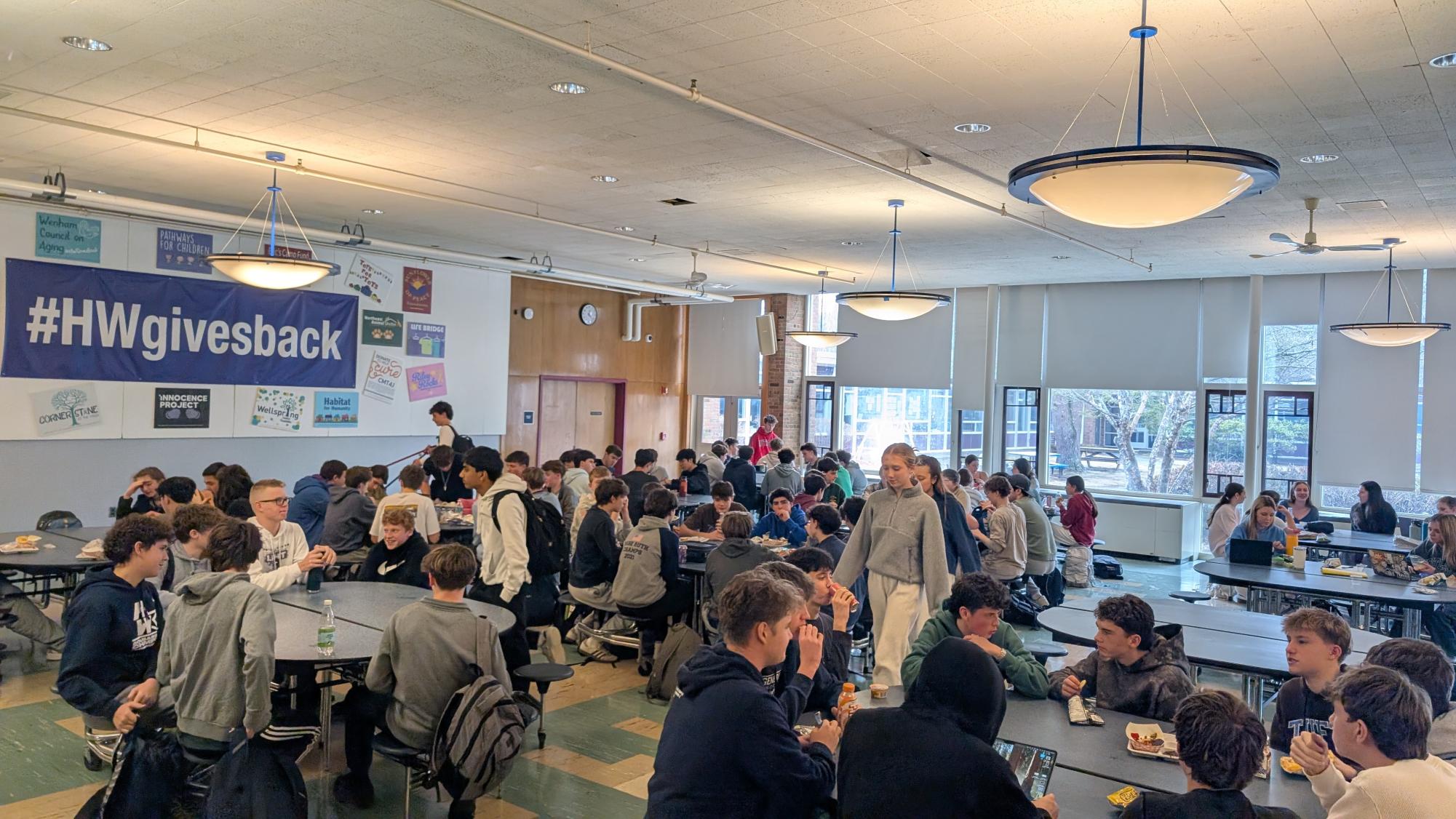
Since the start of the 25-26 school year, there has been a definite change in the lunchroom atmosphere. More people are talking, conversing, and interacting with their tablemates rather than having their heads in their phones.
According to a couple of sophomore students, the difference is “very large,” and now people are being louder because “they don’t have anything else to be distracted by.” Many students agree with this, but some say that they don’t notice a significant difference.
Additionally, according to Principal Bryan Menegoni and guidance counselor Matt Fitzgibbons, there is a huge difference in the lunchroom atmosphere. Menegoni mentioned that the difference is very noticeable: in the morning, when students are allowed to have their phones, he’s seen groups of people sitting together, not saying a word, all of them buried in their phones. This is no longer what it looks like in the lunch room. Tables are talking, and everyone is included in the conversation.
All in all, there has been a noticeable change in the cafeteria’s volume, and the no-phone rule seems to be benefiting students and encouraging more personal interaction.
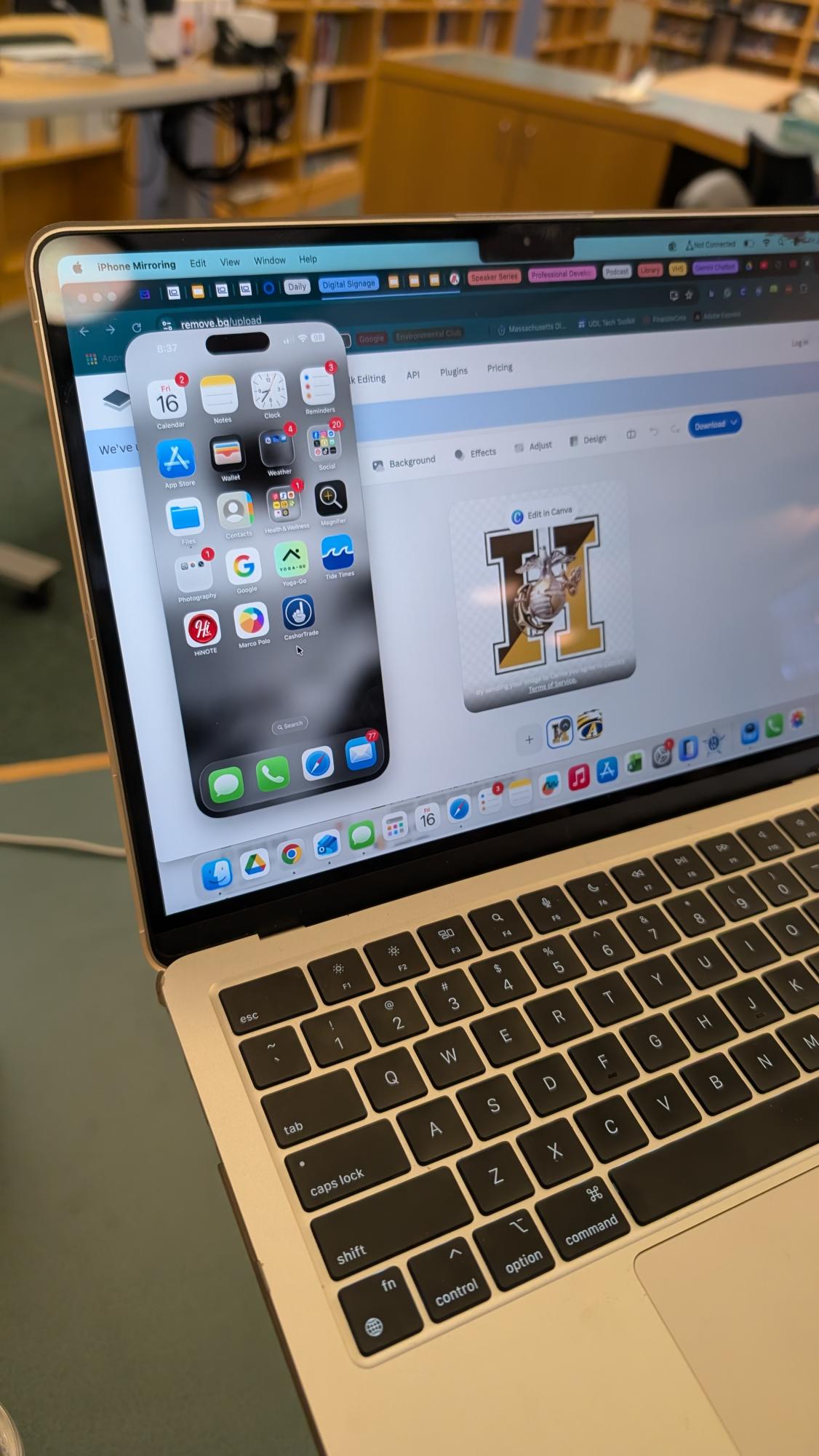
- The number one alternative, largely used, is Apple laptops. They can be connected to all the apps on your phone, and are an easy alternative. Students use Messenger as an alternative to phone text messaging. Another important tie to computers is the option to screen mirror your cell phone, which lets students access their phones on their computers. And of course, email is always an option for communication, though this form is least likely to be used.
- The second most popular way students are wiggling their way around the phone policy would be excuses or fibs. Some students claim they left it in their car or at home. After interviewing Mr. Menegoni, it’s clear that students get into trouble when they are not truthful about their phone’s location.
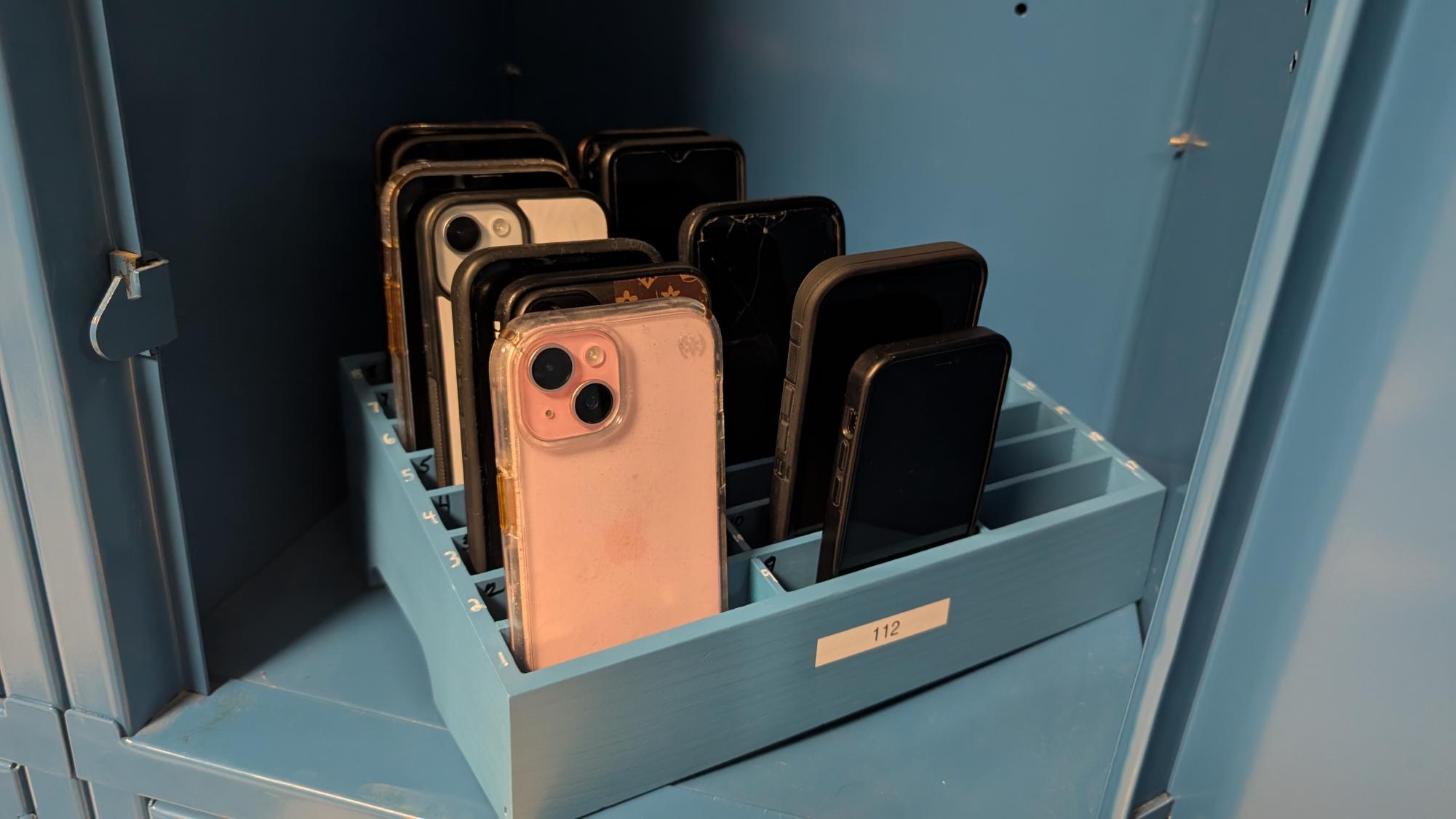
- Some students are trying to be particularly sneaky by putting a burner phone in the phone holder. It’s a dangerous strategy, for the school and the students, as it gives teachers another thing to worry about and gets people in trouble. However, if the actual phone is seen, it is immediately confiscated, and students will find themselves meeting with the admin, and parents/guardians will be notified. Additional consequences will likely follow.
- A positive alternative to a phone would be a planner. Teachers generally appreciate this strategy, as it doesn’t disrupt learning either way. This is a beneficial alternative that allows students to be in the present (not on computers), which is another plus.
- Finally, many students have adapted and say the adjustment was not too hard. They can use other electronics (e.g., an iPad or a computer) to complete work and reach out to parents/guardians if necessary. They also feel that as a whole, they are less distracted during class. Sometimes it’s a challenge, like when students need to take pictures for a class assignment or record a graded discussion, but overall, students feel they have been able to get through the day just fine.